How Much Should I Feed My Dog? Do the Math Instead of Guessing
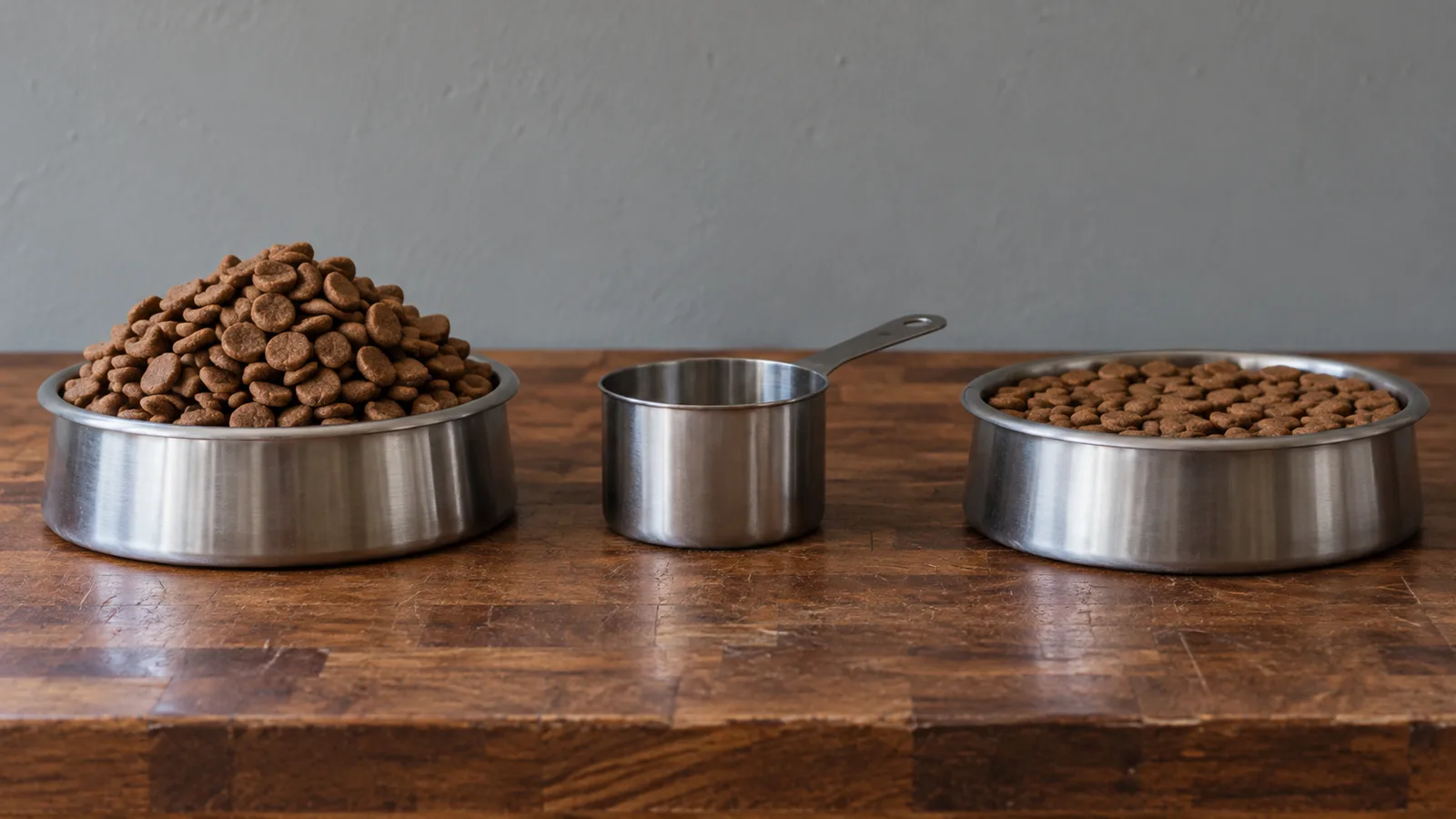
The feeding chart on the bag gives you a range, and the range is wide. Forty to sixty pounds, two to three cups. Somewhere in that spread is the right amount for your dog, and the chart has no idea which end. On a 40-pound dog, the distance between the low number and the high number is more than a hundred calories a day, which is around ten percent of what that dog actually needs.
The real number isn't hard to work out, and you can check your answer with your hands in about thirty seconds.
The short answer
A moderately active 50-pound dog needs somewhere near 1,100 calories a day. A 20-pound dog lands around 550. An 80-pound dog sits close to 1,550. Start at the number for your dog's size, feed it for two weeks, then adjust based on what you feel along their ribs.
That last step matters more than the arithmetic. Every dog burns calories at their own rate, and the formula is a starting line.
Why per-pound rules of thumb fall apart
People reach for something like "30 calories per pound" because it's easy. It's also wrong at both ends of the scale.
A 20-pound terrier needs roughly 27 calories per pound. An 80-pound shepherd needs about 19. Smaller bodies lose heat faster relative to their size and run a hotter metabolism to keep up, so they eat more per pound than big dogs do. Any rule that uses a flat multiplier will overfeed your Lab and underfeed your Frenchie.
Veterinary nutrition handles this with an exponent instead. Resting energy requirement equals 70 times body weight in kilograms raised to the power of 0.75. The 0.75 is what bends the curve so it works for a Chihuahua and a Great Dane at the same time.
Run the numbers on your own dog
Start with resting calories. Divide your dog's weight in pounds by 2.2 to get kilograms, raise that to the 0.75 power (any phone calculator with a y^x button does this), then multiply by 70. A 50-pound dog is 22.7 kilograms. Run it through and you get about 728 resting calories.
Then multiply for activity, because resting means lying on the floor doing nothing and real dogs move. Common multipliers are 1.2 for a sedentary dog, 1.5 for a moderately active one, and 2.0 for a dog working hard most days. Spayed and neutered dogs sit lower in the range than intact dogs of the same size. That 50-pound dog at moderate activity: 728 times 1.5, or roughly 1,090 calories a day.
Last, turn calories into food. This is where most people stall, because they're measuring in cups and the answer is in calories.
Every food publishes its caloric density. Ours runs 3,387 calories per kilogram, which works out to about 1,536 calories per pound. So that 50-pound dog eats roughly 0.71 pounds a day, a bit over 11 ounces. An 80-pound dog at the same activity level eats almost exactly a pound a day.
If your food publishes calories per cup instead, use that. If it doesn't publish a number at all, that is worth asking about.
Weigh it, don't scoop it
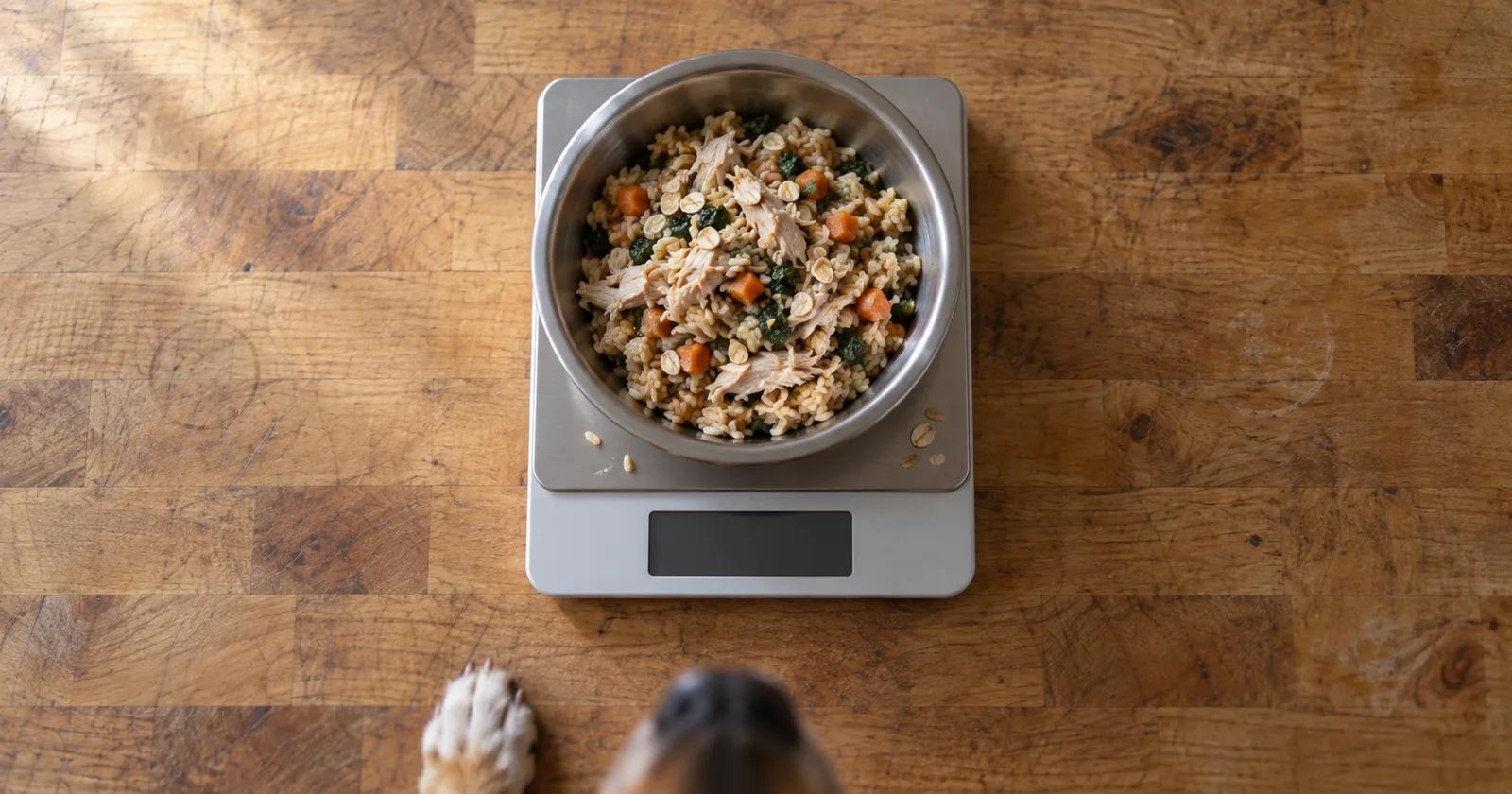
A kitchen scale costs less than a bag of treats and removes the largest source of error in the whole process.
Cups are a volume measurement being used to portion something sold by weight. How tightly the food packs, how full you scoop, whether the pieces are large or small: all of it moves the real number by a surprising margin. Two people scooping "one cup" from the same container will land meaningfully apart.
Weigh the portion once, note where it fills your container, and you can go back to scooping with a mark you trust.
Denver moves the number more than you'd expect
Two things about living here change what your dog needs, and both of them arrive in the fall.
The first is the weekend gap. A lot of Front Range dogs live two lives. Monday through Friday they're home while you work, maybe a walk around the block. Saturday they're doing eight miles at Chatfield or up in the foothills. That dog is sedentary five days a week and highly active two, and a single daily number splits the difference badly in both directions. Feeding a little more on big days and a little less on quiet ones tracks reality better than one fixed scoop.
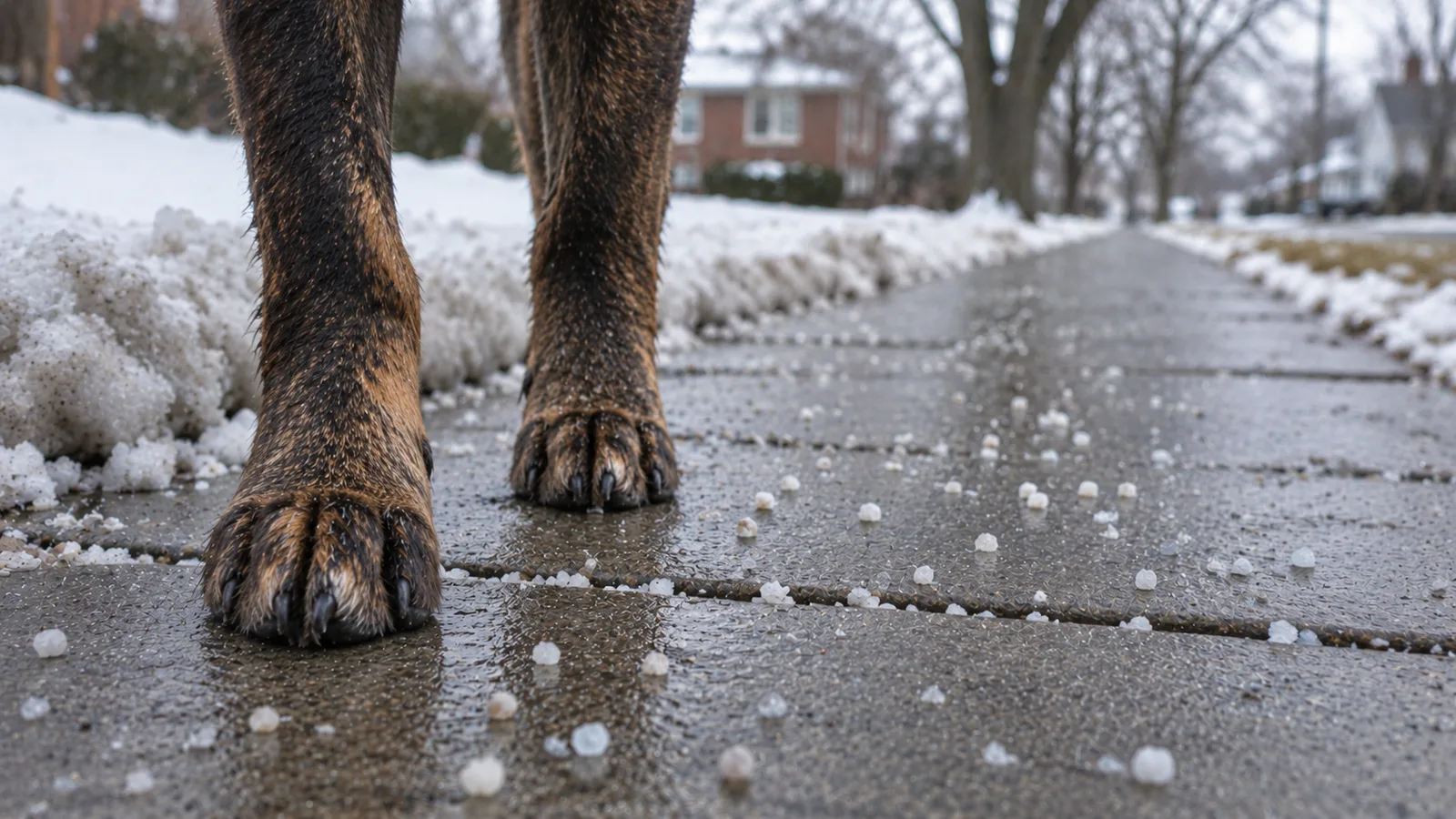
The second is the seasonal drop. Denver's average window for measurable snow opens around October 17. Once it does, walks get shorter, the dog park visit turns into a lap around the block, and activity falls off without anyone deciding to cut it. The food usually doesn't change. That mismatch is how a dog arrives at their spring vet appointment six pounds heavier with nobody able to point to when it happened.
A winter coat hides the evidence. On a fluffy dog you will not see the gain until March.
Check your work with your hands
Whatever number you landed on, your hands are how you find out whether it's right.
Run your fingertips flat along your dog's side with light pressure. You should feel ribs the way you feel your own knuckles through the back of your hand: covered, but clearly there. If you have to press to find them, that's too much cover. If they feel like a washboard with nothing over them, that's too little.
Then look down at your dog from above. There should be a visible narrowing behind the ribs. From the side, the belly should tuck up toward the back legs rather than running level.
Veterinarians score this on a nine-point scale, where four and five are ideal. It takes ten seconds and it's more reliable than the scale, because a fit 52-pound dog and a soft 52-pound dog weigh the same.
Worth knowing: the Association for Pet Obesity Prevention classified 59 percent of US dogs as overweight or obese in 2022, based on their own veterinarians' assessments. Most of those owners thought their dog looked fine.
Where owners usually go wrong
- Treats don't get counted. Training treats, the crust of your toast, the dental chew before bed. These are calories and they add up fast on a small dog. Keep treats under about ten percent of the daily total and take that ten percent out of meals rather than adding it on top.
- The bowl stays full all day. Free feeding makes the portion unknowable and removes the earliest signal that something is wrong. A dog who normally eats in two minutes and suddenly walks away from dinner is telling you something, and you only hear it if meals have a start and a finish.
- Nobody adjusts after the puppy year. A dog finishing growth needs materially fewer calories than one still building, and that change happens quietly while the scoop stays the same.
- Two people in the house are both feeding. Easy to fix once you spot it, and it can double a dog's intake without either person knowing.
Common questions
How long before I know if I got it right?
Two to four weeks. Weight moves slowly and day-to-day fluctuation will mislead you. Weigh on the same scale at the same time of day, and use the rib check alongside it.
My dog acts starving no matter how much I feed. Am I underfeeding?
Probably not. Appetite and need are only loosely related, and some breeds behave as though every meal is their last. Trust the rib check over the begging. If appetite changes suddenly, or comes with weight loss, that's a call to your vet rather than an adjustment to the scoop.
Does my dog need more food because of the altitude?
Not meaningfully for calories. Denver sits at 5,280 feet, and the bigger effect on a dog is water. The metro area averages around 52 percent relative humidity and the air pulls moisture out of everything, so keep water available and watch that they're drinking. Hydration, not portion size, is the altitude issue.
Should senior dogs eat less?
Often, though not always. Older dogs move less, which lowers the need, but some lose muscle and need protein held steady while calories come down. Age alone isn't the instruction. Ask your vet to score body condition at the next visit and adjust from there.
Is it bad to feed once a day?
Most adult dogs do fine on two meals. Once a day works for some. Puppies, small breeds, and dogs with certain medical conditions need more frequent meals, so check with your vet before consolidating.
Feed the number, not the scoop
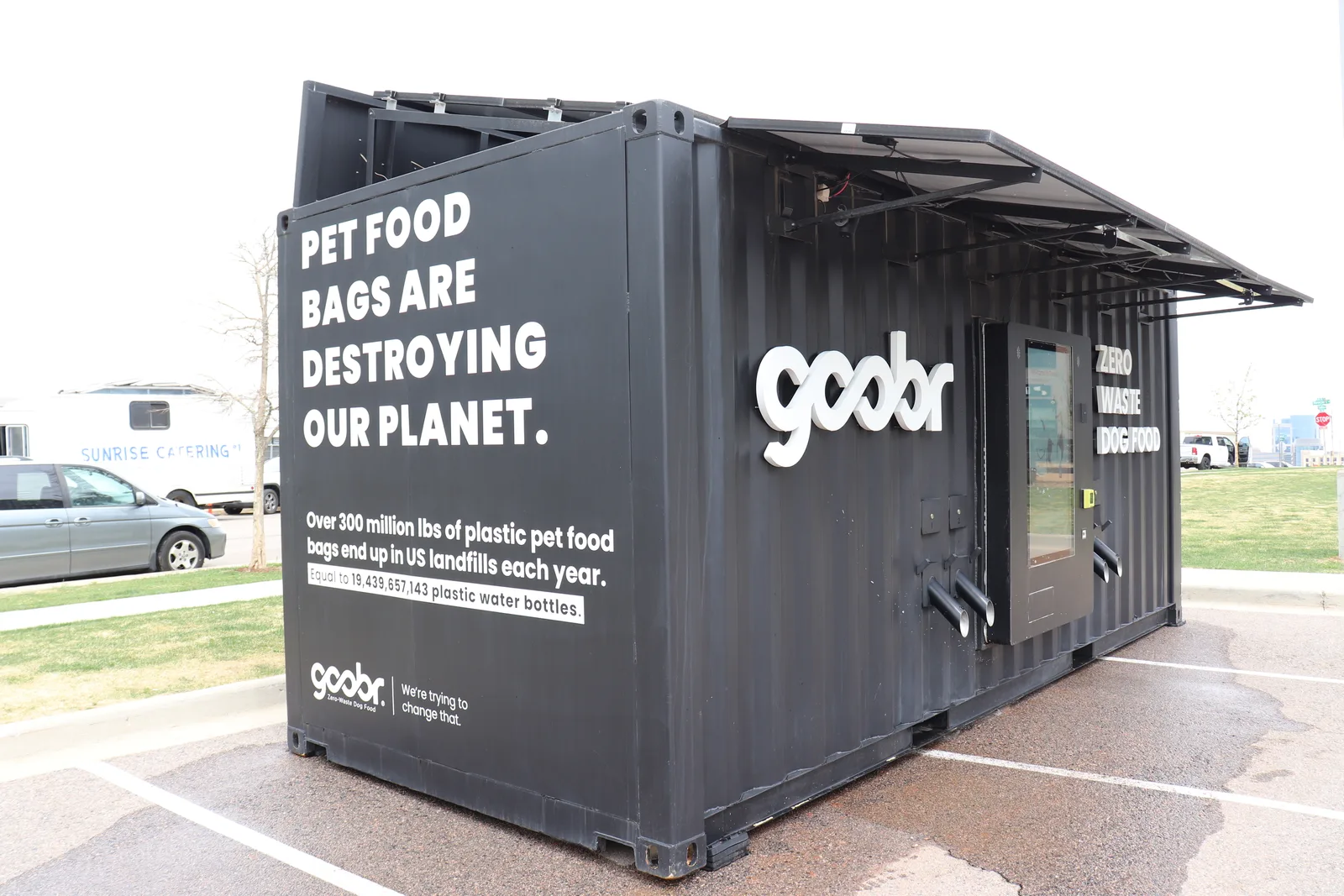
If you want to stop guessing, the simplest change is buying food by weight instead of by bag. We sell by the pound, so the math stays in the same units all the way through: you know what your dog needs per day, and you know what you're putting in the container.
Every Goobr recipe publishes its full ingredient list and its caloric density, because Colorado law requires the disclosure and because you cannot portion food correctly without it. Chicken or lamb, both at 3,387 calories per kilogram.
You can fill any clean, food-safe container at the Goobr Station at Belleview Station Dog Park, 4822 South Newport Street, open all day every day. Or we'll bring it to your porch on a subscription starting at $30 a month, across Denver, Adams, Arapahoe, Broomfield, Douglas, and Jefferson counties.
Not sure which size plan fits your dog? Call or text Tage at (720) 978-9174. He'll do the math with you.
Keep reading