Is Ice Melt Safe for Dogs? What Denver Sidewalks Put Their Paws Through
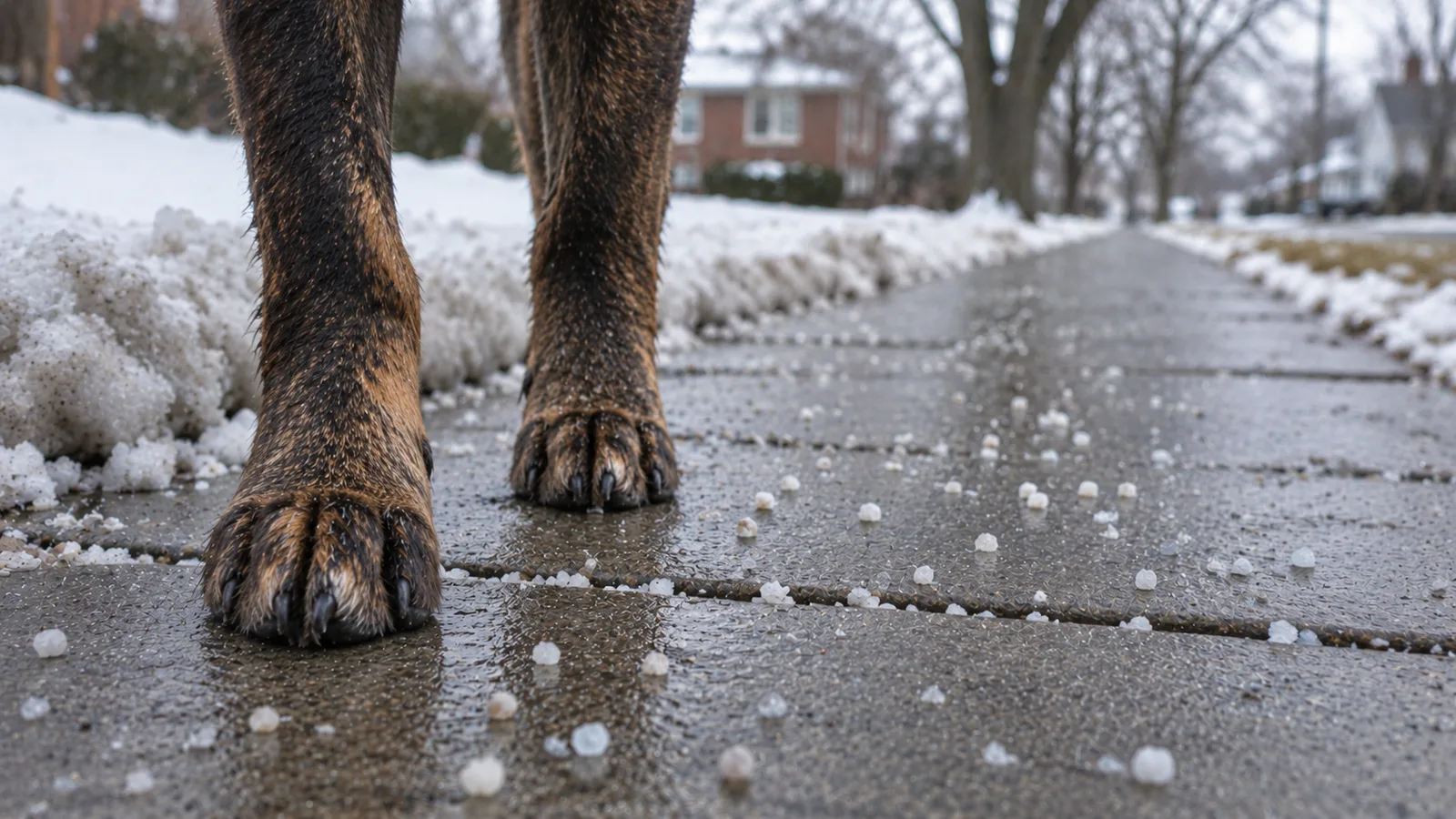
The first real snow hits, the sidewalks get treated overnight, and by the next morning your dog is walking through a chemical you didn't choose and can't see. Then they come inside and lick their feet.
Most winter paw problems in Denver trace back to that sequence. The fix is unglamorous and it works: wipe the paws every single time they come in. The rest of this covers what's actually on the ground, what it does to a dog, and the point at which it stops being an irritation and becomes a vet visit.
The short answer
Wipe your dog's paws with a damp cloth or a baby wipe as soon as you're through the door, every walk, all winter. Get between the toes and the pads, not just the bottom. If you can rinse in a shallow tub of lukewarm water, better.
That one habit prevents most of it, because nearly all the harm comes from the chemical sitting on the skin or getting swallowed off the feet.
What's on the sidewalk
Ice melt is not one product. The bag says "ice melt" and the contents vary a lot, which is why some walks bother your dog and others don't.
- Sodium chloride is rock salt, the cheapest and most common. Swallowing a large amount can cause sodium toxicosis, with vomiting, diarrhea, dehydration, rapid heart rate, rapid breathing and fever. The reference lethal dose is around 4 grams per kilogram of body weight, which is a smaller pile of salt than you'd guess for a 20-pound dog.
- Calcium chloride and the other calcium salts are the harshest on contact. Pet Poison Helpline describes calcium salts as severe irritants to skin and paws, and swallowing them causes serious stomach upset. The ASPCA specifically flags calcium chloride for the risk of mouth ulceration when a dog licks it off. Potassium chloride is also a severe irritant, and ingestion can produce bloody vomiting or diarrhea.
- Magnesium chloride is gentler on the whole. Swallowing it generally causes stomach upset, and high magnesium levels in the blood are only a real concern with very large amounts in a dog with existing kidney disease. Colorado uses magnesium chloride widely on roads, so it's a familiar one here.
- Urea is the least dangerous of the common options. Drooling and mild stomach upset are the usual result, though large amounts can cause weakness and tremors. It also works poorly in genuinely cold temperatures, which is why you see less of it on a Front Range January morning.
Nothing on that list is harmless. "Pet-safe" on the front of a bag usually means urea or magnesium chloride rather than "your dog can eat this."
What it does to paws
There are two separate problems, and the second one catches people out.
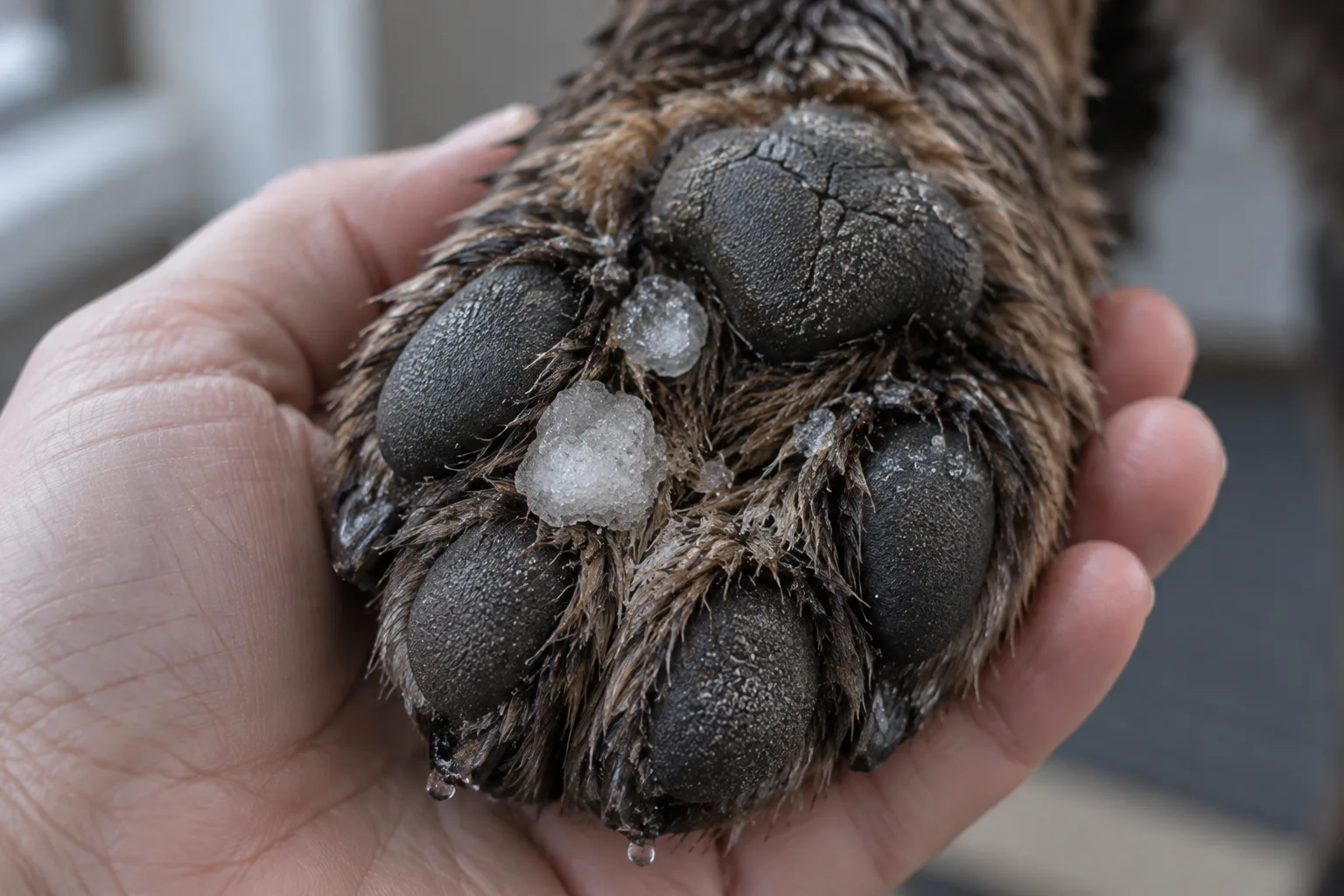
The chemical problem is direct irritation. Salt crystals and calcium compounds draw moisture out of skin and inflame it. You see cracked pads, redness between the toes, and a dog who starts licking a foot obsessively in February.
The mechanical problem is worse in Denver than people expect. Wet feet plus 20-degree air means ice balls form in the fur between the pads, particularly on dogs with feathered feet. Those balls pull hair, spread the toes apart, and split the webbing. Then the salt gets into the split.
Denver averages 49 inches of snow a year and a semi-arid climate with roughly 52 percent relative humidity, which is a combination that's already hard on skin. Paw pads dry out here without any help from chemicals.
The part that puts dogs in the ER
The serious cases come from swallowing it rather than standing in it. A dog walks four blocks, picks up salt on all four feet, comes home and cleans themselves. That's the delivery mechanism for almost every emergency visit. The dog who eats a mouthful of snow off a treated sidewalk is doing the same thing faster.
Call your vet, or the ASPCA Animal Poison Control Center at (888) 426-4435, if you see:
- Repeated vomiting or diarrhea after a walk
- Excessive drooling, or pawing at the mouth
- Unsteadiness, tremors, or seizures
- Weakness or unusual lethargy
- Sores or ulcers in the mouth
Do not wait to see whether it passes. Sodium toxicosis and calcium burns both get worse with time, and the treatment is straightforward if you're early.
Antifreeze
Antifreeze pools in the same places salt does, in driveways and parking lots, it tastes sweet, and it is lethal in very small amounts. Any suspected antifreeze exposure is an emergency vet visit immediately, not a phone call.
Denver's shoveling clock puts salt down fast
You get very little warning here, and it's written into city code.
Denver requires residential property owners to clear the sidewalk within 24 hours after snow stops falling. Commercial properties get 4 hours. Which means the morning after a storm, every business sidewalk on your route has already been treated, and most of the residential ones will be by evening.
Practical version: the day after a Denver snow is the highest-exposure walk of the winter. Plan it. That's the day for booties, or the short route, or the wipe-down you actually do properly instead of a quick swipe.
The other Denver detail is timing. Measurable snow runs from mid-October to late April on average, so this isn't a January problem. It's a six-month problem.
What actually protects them
- Wipe every time, with a damp cloth or baby wipes kept by the door, getting between the toes. This is the one that matters most, and it takes fifteen seconds.
- Trim the fur between the pads. Shorter hair there means fewer ice balls and less surface for chemicals to cling to. A groomer can do it, or you can with blunt-nosed scissors if your dog tolerates it.
- Booties give complete protection and are a hard sell to most dogs. Start indoors, short sessions, treats. Some dogs never accept them, and that's fine.
- Paw balm before the walk gives a partial barrier and helps with the dryness. It does not replace wiping afterward.
- Watch what they eat out there. Don't let them snack on snowbanks, especially the gray plowed piles at the curb, which concentrate everything that was on the road.
Then there's your own sidewalk. If you're buying melt for it, look for urea or magnesium chloride, use less than you think you need, and sweep up the excess once the ice is gone. Store the bag where the dog can't reach it. Your neighbors' dogs walk past your house too.
Winter skin is partly an inside job
Barrier care handles what's on the outside. The skin itself is built from what your dog eats.
Dietary fat is what keeps the skin barrier intact and the coat holding moisture, and it's the first thing a nutritionist looks at when a dog gets flaky in January. Denver's dry air makes that harder than it would be somewhere humid. Food is not a treatment for a chemical burn and it will not fix a cracked pad, but a dog going into winter on a diet that's short on quality fat starts the season with less margin.
If your dog gets itchy or flaky every winter, mention it at their next appointment. Persistent skin problems have a lot of possible causes and a vet can narrow them faster than swapping foods can.
Common questions
Is pet-safe ice melt actually safe for dogs?
It's safer, though not actually safe. The label generally means urea or magnesium chloride instead of rock salt or calcium chloride, which lowers the risk of burns and serious poisoning. It still causes stomach upset if a dog eats enough, and you should still wipe paws afterward.
How do I know if the ice melt hurt my dog's paws?
Look for limping, licking or chewing at one foot, redness between the toes, and pads that feel rough or show splits. Check the webbing, which is where it usually starts.
My dog ate snow off a treated sidewalk. What do I do?
Take note of how much and what kind of melt if you can tell, offer fresh water, and call your vet or the ASPCA Animal Poison Control Center at (888) 426-4435. A small lick is usually fine. Don't guess if you're unsure.
Do booties really work?
Yes, better than anything else, when the dog will keep them on and they fit. Loose booties fall off in snow and tight ones cause their own problems. Take the time on sizing.
Should I rinse or just wipe?
Wiping is enough for a normal walk. Rinse in lukewarm water after a heavy-exposure walk, or if you can see white residue on the fur, then dry between the toes so you're not leaving moisture sitting there.
Is a heated sidewalk or sand better?
Sand and non-clumping cat litter give traction without chemistry, though they track indoors and don't melt anything. For a small walkway they're a reasonable trade.
Real food, no plastic, filled by the pound
We're Goobr. We make fresh dog food in Denver and sell it without the bag, because 300 million pounds of pet food packaging goes into US landfills every year and that always seemed like a strange thing to be good at.
Both our recipes run 27 percent minimum protein and 12 percent minimum fat, with the full ingredient list published, which Colorado law requires and we'd do anyway. Food gets stored in food-grade stainless steel and rotated every 90 days.
Fill any clean, food-safe container at the Goobr Station at Belleview Station Dog Park, 4822 South Newport Street, open 24 hours a day at $2.99 per pound. Or put it on your porch: subscriptions start at $30 a month across Denver, Adams, Arapahoe, Broomfield, Douglas, and Jefferson counties, cancel anytime.
Questions about what your dog should be eating through winter? Call or text Tage at (720) 978-9174. He answers.
Keep reading